Wednesday, February 27, 2008

More Cynicism-

Some more thoughts provoked from the last discussion with the B3 team:

What did Antisthenes think about pleasure and pain? There are snippets of information here and there. For example:

DL 6.2: He thought that pain (ponos: perhaps 'toil' or 'hard work' would be a better translation, but ponos often carries the connotation of discomfort or pain) is good (for which claim he pointed as support to the example of Heracles). Apparently he got this idea from Socrates' hardiness.

Saying that pain is good does not, of course, require you to think that pleasure is bad. There are plenty of texts which talk of pain/ponos being instrumentally good. And it might be instrumentally good in the sense that it allows you to win greater pleasure in the long run.

But there are other texts which offer the stronger claim that pleasure is for some reason not to be pursued.

DL 6.3: He said he'd rather be mad than feel pleasure.
DL 9.101: Epicurus thought that pleasure is good; Antisthenes thought that it is bad.

The second of these is perhaps less compelling because it is clearly part of a set of doxographical divisions and categorisations which by their nature cannot always capture more subtle views. Anthisthenes is a nice contrast with the hedonists. Other texts appear to ascribe to him distinctions between pleasures and also the claim that some - perhaps those that are worked for, or deserved - ought to be pursued. (E.g. Stob. 3.29.65: you should pursue pleasures 'after' (meta) ponos but not those 'before' (pro); cf. Stob 3.6.43 and 3.18.26 on the proper attitude to 'everyday' pleasures; Athenaeus 12 513a even says that Antisthenes thought pleasure to be good, at least pleasure 'of the kind that is not later regretted'.) The sources may be a bit jumbled here. Still, there is no doubting that he thought some, perhaps even all, pleasure is best avoided.

Then there is the depiction of Antisthenes in Xenophon, esp. Symp. 4.39:
καὶ πάντα τοίνυν ταῦτα οὕτως ἡδέα μοι δοκεῖ εἶναι ὡς μᾶλλον μὲν ἥδεσθαι ποιῶν ἕκαστα αὐτῶν οὐκ ἂν εὐξαίμην, ἧττον δέ· οὕτω μοι δοκεῖ ἔνια αὐτῶν ἡδίω εἶναι τοῦ συμφέροντος.

And all these things seem to me to be so pleasant that I wouldn't wish to enjoy each of them more, but less. Some of them seem to me to be in this way more pleasant than is beneficial.
Antisthenes has been describing his frugal lifestyle and the way in which he can make do with very little. He has accustomed himself sufficiently to a life free from luxury that he takes great pleasure from his modest house and simple life. Most important, these things provide him with pleasure. Of course, it is possible to think that this is once again pleasure of a different sort from the pleasures rejected in e.g. DL 6.3, perhaps like Diogenes' pleasures in despising pleasures. But that doesn't seem too convincing since Antisthenes' point appears to be that he too enjoys being warm, not being hungry, sex and all the other things we might think of as simple and obvious cases of pleasure. More to the point, his last comment in Xenophon surely points to him being aware of a problem similar to that raised for Diogenes' views. Antisthenes is concerned that he is enjoying the frugal life too much. Perhaps it's time for some advanced training in frugality or a bit more ponos. This is not quite like the problem faced by Diogenes: Antisthenes is not concerned that he is taking pleasure in the very fact of his being ascetic. Rather, he is concerned that his asceticism is in a way self-defeating. His avoidance of luxury has made his frugal life now appear luxurious to him.

Thursday, February 21, 2008

Cynic pleasure

I've been trying to piece together what the Cynics think about pleasure, but it's not at all easy. Here’s a first set of thoughts.

Diogenes Laertius (6.71) says this is the view of Diogenes of Sinope:

καὶ γὰρ αὐτῆς τῆς ἡδονῆς καταφρόνησις ἡδυτάτη προμελετηθεῖσα, καὶ ὥσπερ οἱ συνεθισθέντες ἡδέως ζῆν, ἀηδῶς ἐπὶ τοὐναντίον μετίασιν, οὕτως οἱ τοὐναντίον ἀσκηθέντες ἥδιον αὐτῶν τῶν ἡδονῶν καταφρονοῦσι.

(1) For even the despising of pleasure is itself the most pleasurable, when we are accustomed to it; (2) and just as those who are accustomed to a life of pleasure find it unpleasant when they pass over the opposite, so those whose training has been of the opposite kind derive more pleasure from despising pleasure than from the pleasures themselves (trans. Hicks, lightly modified; I've added (1) and (2) for reference).

I think I can understand (1) although it is clearly phrased in a deliberately paradoxical fashion. I suppose it says that after a time the very practice of denying yourself indulgences can become something pleasant. Perhaps you begin to take pleasure in the fact of your self-control. You begin to enjoy the state of mind you reach now that you are no longer busy pursuing pleasure. We might even say that there are two kinds of pleasure involved here: (a) pleasure of the sort that most people enjoy, and (b) pleasure of the sort enjoyed only as a result of disdaining pleasures of type (a). Now, here’s a thought: Pleasures of type (b), we must further suppose, must be somehow sufficiently different from pleasures of type (a) as to be acceptable and not deserving of a similar kind of meta-disdain, for fear of a regress. (You can imagine a particularly hard-line ascetic scolding a student who dares to say that he is in fact taking pleasure in his disdaining pleasure...) This seems like a coherent thought, though not a very persuasive one. I suppose the idea behind (1) as a whole is that it allows a response to an objection based on the notion that the life Diogenes recommends on other grounds (e.g. that it is a ‘natural’ life) looks inhumanly devoid of pleasure. Not so, comes the reply, since the disdain of pleasure can itself provide pleasure. But in that case, pleasures of type (b) cannot be so different from pleasures of type (a) that they won’t do as an answer to this kind of objection.

What about (2)? The analogy appears to be between a hedonist who feels disgust when forced into temporary asceticism and an ascetic who, we are told, takes less enjoyment from an indulgent night out than from a night in despising pleasure in the way elaborated in (1). In both cases, the life one is accustomed to makes it unpleasant to live, however temporarily, in an alternative way. So the hedonist will feel that his very way of life is being denied and will find it unpleasant, that is to say less choice-worthy in terms of what he finds valuable, namely pleasure. But Diogenes also wants to say that the ascetic, on the other hand, if made to life the life of a hedonist, will find that life unpleasant compared with his own. But is this why he doesn’t want to live such a life? Presumably not; because it is not, I suppose, in order to experience the pleasures of disdaining pleasures (as in (1)) that the ascetic takes up his asceticism.

Monday, February 18, 2008

Every day is like Sunday...

.. well, it isn't. One of the few things Moz gets wrong. Partly, this is because yesterday was good for two reasons which are not common to every other day.

1. I discovered that new Portishead, Tricky and Massive Attack albums are due this year. Hooray. I briefly indulged in remembering my MPhil year in 1995-6 when we watched This Life and watched them listening to Portishead before doing the same ourselves. And then I remembered how Alex, Mark, and I could do an excellent a capella version of the This Life theme tune -- esp. that guitary bit just before the end of the opening credits.

2. Robert Carlyle was in the new BBC Sunday drama, The Last Enemy, ('Look! See how bad ID cards will be!) and got through the whole first episode without saying a word. He just looked a bit moody, typed a bit while sitting in an anti-surveillance cage-thing, and did that thing when he flexes his jaw muscles with his mouth closed and his cheek wobbles a bit. Menacing. I don't think he's really a baddie, though, because in BBC drama things these days the baddies are the ones wearing the suits.

Friday, February 15, 2008

Sources for a new Diogenes Laertius

Nick used the following anecdote last night to illustrate a point in Plotinus. I can't remember quite what the Plotinian point was, but this made me laugh. Robert rightly wondered if it had the air of a Diogenes Laertius anecdote. So in good Laertian style, I got this version from Wikipedia (which DL would surely have loved. He could have submitted rubbish poems on various people...).

The Life of A. J. Ayer (extract)

Rogers [1] says of Ayer: At a party that same year [2] held by fashion designer Fernando Sanchez, Ayer, then 77, confronted Mike Tyson harassing the (then little-known) model Naomi Campbell. When Ayer demanded that Tyson stop, the boxer said: "Do you know who the fuck I am? I'm the heavyweight champion of the world," to which Ayer replied: "And I am the former Wykeham Professor of Logic. We are both pre-eminent in our field. I suggest that we talk about this like rational men". Ayer and Tyson then began to talk, while Naomi Campbell slipped out.

It is not know what the two men talked about. It is unlikely that Tyson as a result of this meeting became Ayer's akoustês...

Notes

[1] See Rogers, Ben A.J. Ayer: A Life, Grove Press, 1999, p. 344.
[2] 1987.

Wednesday, February 13, 2008

Pest control?


I should be used to seeing slightly odd things around college, but this is something new. For the past couple of days, Old Court has been home to two birds of prey. They looked pretty comfortable despite the fog this morning. I shall do some research and find out why they are here...

UPDATE: I am told they are here to scare pigeons.

Monday, February 11, 2008

Platonic polemic

I'm afraid I haven't been up to much that is blogworthy recently, but I have been thinking about a paper I'm giving this summer at a conference on Plutarch and philosophy, on Non posse and Plato's Republic. I more or less fell into the topic since I've been thinking about Republic IX and also about Epicurean hedonism and this Plutarch text seems to me to be a nice way of bringing the two topics together. There is always the danger, I suppose, that my preoccupations have me seeing things in the Plutarch that are not necessarily that prominent or significant, but I'll live with that. There's definitely something in it, though, and more than the obvious links between e.g. Non posse 1091D-E and Rep. 584dff. (For example, it seems to me that Rep. 586a-b lies behind a lot of Plutarch's polemic, coupled with the familiar Epicureans-as-pigs idea.)

Anyway, the overall point is going to be something like this: Plutarch uses the work to bash the Epicureans over the head with Plato's Republic. They are completely wrong about pleasure, the soul, the body, what humans are, what the value of knowledge is, death, the gods -- in short, all the important stuff of philosophy. But it's a clever way of doing this because Plutarch uses all sorts of quotations and cues from the Epicureans themselves as a way of damning them and also because it seems to me there is good reason to think the Epicureans had already had a go at Plato's Republic themselves. Certainly, Plutarch's annoyer-in-chief, Colotes, had stuck the boot into the myth of Er. No wonder, then, that Plutarch reaches for the Republic for his material in retaliation. He likes turning the tables in this way: Adv. Col. is an exercise in showing that not only was Colotes wrong in his criticisms of earlier philosophers, but the criticisms really apply to the Epicureans themselves and not their opponents; Non posse, its companion-piece, on this view is an exercise in showing how the Epicureans' serious misunderstanding of the nature of human beings and the proper nature of pleasure shows that far from offering a recipe for a pleasant life, they in fact deny us all proper and fulfilling experience of pleasure.

That's the line, anyway. Now I just have to write the thing and that, I tend to find, is where things get tricky and the text gets in the way of all the neat and tidy points I want to make. Ho hum.

Wednesday, February 06, 2008

Astronomical

Me: How was playgroup today?

Daughter #2: I bumped into ____. We were running. We crashed together just like Earth and Theia.

I only got the last bit because we've been watching Earth: Power of the Planet over and over. But in case you're wondering, it's explained here.

Sunday, February 03, 2008

Perhaps Callicles was right...


Well, we now know just why it feels so pleasant to scratch an itch... Read the Times report here. (And thanks to JB for the link.) The picture, by the way is of Robert Arneson 'Pablo Ruiz with Itch' 1980, Nelson-Atkins Museum of Art, Kansas City, Missouri. Found on flickr.com. (Click on the picture for more details and for the photographer's credits.) Does he look like he's enjoying it?

Tuesday, January 29, 2008

Plato, pleasure, and the arts

Plato sometimes gets a bad press for his views on the value of art, mostly because of his insistence in Republic on cleaning up the content of poetry, his concentration on the various potentially harmful (and beneficial) psychological effects of different rhythms and the like and his general metaphysical distaste for mimetic representations. But in a class this morning we came across an interesting passages in Laws II which might add another dimension. Here, it seems, the Athenian is prepared to imagine a class of works of art which are properly judged solely according to the pleasure they produce.

ΑΘ. Οὐκοῦν ἡδονῇ κρίνοιτ’ ἂν μόνον ἐκεῖνο ὀρθῶς, ὃ μήτε τινὰ ὠφελίαν μήτε ἀλήθειαν μήτε ὁμοιότητα ἀπεργαζόμενον παρέχεται, μηδ’ αὖ γε βλάβην, ἀλλ’ αὐτοῦ τούτου μόνου ἕνεκα γίγνοιτο τοῦ συμπαρεπομένου τοῖς ἄλλοις, τῆς χάριτος, ἣν δὴ κάλλιστά τις ὀνομάσαι ἂν ἡδονήν, ὅταν μηδὲν αὐτῇ τούτων ἐπακολουθῇ;

ΚΛ. Ἀβλαβῆ λέγεις ἡδονὴν μόνον.


Laws 667d-e

So pleasure would be the proper criterion in one case only. A work of art may be produced with nothing to offer by way of usefulness or truth or accuracy of representation (or harm, of course). It may be produced solely for the sake of this element that normally accompanies the others, the attractive one. (In fact, it is when this element is associated with none of the others that it most genuinely deserves the name 'pleasure'.)

You mean only harmless pleasure?

Trans. T. J. Saunders

This discussion seems to carve out a category for a possible work of art which is neither mimetic (and so is not available for evaluation in terms of its accuracy, here: quantitative and qualitative isotês) nor can serve any purpose (and so is not available for evaluation in terms of its usefulness, here: ôpheleia). The Athenian refers to them as 'play' (paidia). Items in this category we would rightly judge solely in terms of the pleasure they produce. Presumably, the more pleasure the better. This is fine, I suppose, both because this class is likely to be relatively small and also because since in these cases we have specified that there is no sense in which these objects might either mislead or otherwise do harm they are sufficiently ethically and psychologically safe that pleasure can be allowed as the proper criterion of evaluation. Importantly, it is only in these cases that pleasure should win the day -- precisely when there is no reason to worry that there are other criteria worth being concerned about -- and in cases where we can make judgements involving standards of accuracy or use these will take priority.

Now another question arises. Does the Athenian imagine that there genuinely are works of art which fall into this category? He gives no examples. If there are any examples, what would they be? Painting, music and sculpture are all cases of imitative arts, we soon discover (668aff.) Perhaps the lack of examples is simply because whatever things fit in this category we need not bother about them as lawgivers or educators. Certainly the Athenian says that they need not bother talking about them or giving any further account of them (667e-8). But if there are no examples of works in this category, then this argument is also perhaps something of a reductio. Only on these very stringent criteria would it be right to judge a work solely on its production of pleasure; but given these criteria no work would qualify. So it is never right so to evaluate works of art.

Saturday, January 26, 2008

Cuts

More bad news. The AHRC, as a result of the Comprehensive Spending Review, has announced that it will be able to offer only 2/3 of it previous number of new postgraduate awards. So there will be only 1000 (that's right, 1000) AHRC funded new postgraduates this coming year. The situation will improve a bit next year, but won't get back to the previous 1500 until at least 2011. Not good news at all if you're about to take your finals and desperately want to stay for further research since for most UK students an AHRC grant is the only way to fund work for a higher degree.

Wednesday, January 23, 2008

Please draw your pain

We had an interesting discussion in the first of this term's classes for the finals ancient philosophy paper 'Pleasure'. We were discussing Ryle's contention (‘Pleasure’ in his Dilemmas, (Cambridge, 1954)) that -- broadly speaking -- although pains are locatable and 'clockable', pleasures are not. I found one of the pain description charts that are often used by patients trying to describe pain to doctors as an aid to diagnosis and pain-relief (click on the thumbnail for a larger version). Can you imagine an analogous version for 'pleasure'? 'How many hours of the day do you feel pleasure?' 'Please draw your pleasure, indicating its location and expressing its quality...'

O tempora!

Such is the decline in classical learning... I realise that Facebook's US formatting may confuse some people who fail to see that they ought to enter their year of (eventual) graduation and not the year they entered the school/university etc. (you see, it's all to do with, say, 'the class of 95'), but there really is no excuse for people listing themselves as e.g. 'Cambridge Alum' before they have graduated. Come on, people! It's a complete pain if you're trying to find somebody. You have first to wonder whether they will have understood the instructions properly.

Monday, January 21, 2008

Amazing!

I know this may not be a surprise to many, but I have just worked out how to rotate my monitor to portrait mode. It's a bit odd and I reckon it will take me a while to get used to it, but certainly it makes word-processing a bit nicer and lots of webpages (including www.classics.cam.ac.uk) look rather nice in this format. I'll live with it for a bit and then decide.

Sunday, January 20, 2008

Managing expectations

Oliver Burkeman's discussion of strategic incompetence is spot on. Unfortunately, encouraging others to have low expectations of me is something I find very difficult to do. (It's just a kind of lying, isn't it? Sure, the outcome might be beneficial in one sense -- I might be asked to do less --- but there's always the danger my cover might be blown.) But there are others who are much better at it and seem to have no qualms at all, so perhaps I should model myself a bit more on them. On the other hand, it's not clear to me that they have arranged such low expectations intentionally. Maybe they just are incompetent, and not strategically so.

Now, can anyone set up an add-on for Thunderbird that lets me answer an email but won't send the reply for a good couple of hours afterwards? Then I can enjoy the mental freedom of an empty inbox while not seeming to be too efficient.

UPDATE: the busy bees have already done what I wanted. Download the 'Send Later' add on here (right-click and save link as).

Thursday, January 17, 2008

Pedantry

Daughter #1 (in histrionic style): My leg itches! It feels like it's bro-o-ken!

Me: _____, your leg is not broken.

Daughter #1: No, Dad. I said it feels like it's broken.

I surrender.

It's tough enough...

.. for a UK student just to get funding to do a PhD in the arts and humanities from the AHRC. Those luck people who get an award are usually grateful and rightly so -- this is public money funding what many see as indulgent higher higher education. But for a University Faculty these awards come at a high price: the AHRC's regulations which penalise departments if a certain proportion their students on these scholarships do not submit in time are hard to understand. Worse, they penalise in particular students in subsequent years who want to come and study by 'blacklisting' departments. (You can read their Submission Rate Policy here [Word document] or go here.) Simon Blackburn has a sensible discussion of a not-so-sensible policy here in the THE (no S any more). The problem really bites when the AHRC is not sensitive to there being reasons for late submission besides indolence or some other academic vice. Students have in any case plenty of reason for trying as hard as possible to submit their theses on time. Usually, this is because their funding runs out and they won't earn much else unless they have a doctorate. And if they have got themselves an academic job, it seems to me that this just goes to show that a promising young academic has been properly and profitably funded.

No one thinks it is reasonable to throw public money at graduate students who never finish and never make any further use of the time and investment expended on them. But if there is a stick to be applied then it's important to aim it properly.

Sunday, January 13, 2008

Bias

This report from Friday's Guardian is a bit depressing. Another piece of important work from the Sutton Trust points out the misconceptions common among state-sector teachers about Oxbridge applications and the success rate of state-schooled applicants. (See the brief report of the Trust's own site here.) Many of the teachers surveyed, for example, falsely believe that it is more expensive to study at Oxbridge than at other universities. The danger is that this leads to them discouraging students from applying.

This all sounds quite familiar. My wife and I both came to Cambridge from good comprehensive schools. We both benefited, in particular, from enthusiastic and inspiring help from one or two particular teachers. It's quite possible that without that fortune I would not have considered applying.

So what should we do? It seems to me that it shows the importance of the university targeting outreach work not only to students but also to teachers. After all, if we can get a teacher interested and enthusiastic about what the university can offer, that enthusiasm and knowledge can be passed on to his or her students year after year.

Wednesday, January 09, 2008

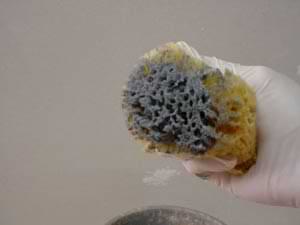
Sponge-throwing

I've just noticed the slightly odd reference to sponge-throwing in the passage from Chrysippus I quoted in the last post:
For in disappointment we are 'outside of' or 'beside' ourselves and, in a word, blinded, so that sometimes, if we have a sponge or a bit of wool in our hands, we pick it up and throw it, as if that would achieve something.
How often would people throw sponges about? Were there sponges just lying around in ancient houses like those foam stress-relief toys? [1] It reminds me of the other very famous instance of someone getting all fed up and throwing a sponge, namely the story of Apelles the painter in Sextus Empiricus PH 1.28:
Once, they say, when Apelles was painting a horse and wished to represent in the painting the horse's foam, he was so unsuccessful that he gave up the attempt and flung at the picture the sponge on which he used to wipe the paints of his brush, and the mark of the sponge produced the effect of a horse's foam (Bury's translation).
For Sextus, this is an example of how the sceptic might stumble upon tranquillity about a given question not by finding a convincing answer but by coming to see how all the possible answers are somehow not convincing enough. Best then to suspend judgement and -- hey presto! -- that's something that brings along the tranquillity we wanted all along. Apelles' story was perhaps quite famous (I wonder if it was in Antigonus of Carystus' account of the painter's life; Antigonus also wrote a Life of Pyrrho, the philosophical inspiration for Sextus' scepticism). But anyway, here's my thought:

Is Chrysippus' reference to throwing a sponge in frustration part of a discussion over the Apelles' story, or something like it? Perhaps it goes like this: the Stoics interpret Apelles' frustration in a way consistent with their general intellectualist account of the emotions. At the root of it is some kind of dispositional belief combined with some judgment about the current failings of his attempts to paint the horse's foam. To get things right, for the Stoics, Apelles ought to get his general beliefs right about what truly matters and what does not. Does it really matter if in the end your painting looks a bit crappy? As in their more famous account of the archer, a good painter is a painter who does all a painter can do to try to get the right result. The final result itself if not ethically significant. (This seems to me not altogether plausible, at least in the case of painters, but that's another story. A good painter is surely someone able to produce good paintings and, because in Apelles' case we are thinking about mimetic art, a good painting will be one which convincingly represents the intended subject; the end result in this instance is clearly rather important...)

Anyway, Sextus has a different story: for him, what matters is that Apelles did get the right result after all (the sponge did create the desired effect), but it did not happen in the way Apelles had expected. The frustration he feels at the repeated failure of his individual attempts at the right technique for painting the foam leads cumulatively to a feeling that there is no particular way to get this right. And it is this position of dissatisfaction which leads to his gesture of surrender -- throwing the sponge -- which unexpectedly leads to the right result.

Now, I have no idea how plausible this is. In any case, the story of Apelles is a nice way to contrast the Stoics and sceptics on an important bit of psychology. And, of course, for Sextus, Apelles' story stands for a general account of Pyrrhonist method, not just an account of a Pyrrhonist's emotional life. But I do wonder if buried somewhere in the mass of evidence we have lost there is some connection between Chrysippus' remark and Sextus' story.
[1] Come to think of it, didn't the Romans -- and probably Greeks -- use sponges as a way of cleaning themselves after using the toilet? And probably also in the bath? You can learn a lot about Greek toilets here. Not sure whether that's a plausible situation for one to feel beside oneself in disappointment, though...

Tuesday, January 08, 2008

Door-kicking

It's nice when you are reading something ancient and come across a passage which strikes a very particular and direct chord. I'm reading Margaret Graver's new book, Stoicism and emotion (Chicago, 2007) and enjoying it a lot. I was also very pleased to read a passage from Galen which she discusses near the beginning of chapter 3. She is interested in the sense that the Stoics can give to the idea that emotions are 'up to us', that is are ultimately dependent on ourselves and we can be held responsible for them. This is a hot topic for some ancient philosophers, closely related to the famous discussions over the possibility of akrasia -- 'weakness of will' or 'incontinence' -- the possibility that I might be overcome by anger, or pleasure, or erotic passion, or some such and end up acting contrary to my better judgement. The Stoics' general psychological picture would appear to rule out this sort of phenomenon. So it is interesting to hear Chrysippus saying something like this:

“οὕτω γὰρ ἐξιστάμεθα καὶ ἔξω γινόμεθα ἑαυτῶν καὶ τελέως ἀποτυφλούμεθα ἐν τοῖς σφαλλομένοις, ὥστε ἔστιν ὅτε σπόγγον ἔχοντες ἢ ἔριον ἐν ταῖς χερσὶ τοῦτο διαράμενοι βάλλομεν ὡς δή τι περανοῦντες δι’ αὐτῶν. εἰ δ’ ἐτυγχάνομεν μάχαιραν ἔχοντες ἢ ἄλλο τι, τούτῳ ἂν ἐχρησάμεθα παραπλησίως.” καὶ ἐφεξῆς “πολλάκις δὲ κατὰ τὴν τοιαύτην τυφλότητα τὰς κλεῖς δάκνομεν καὶ τὰς θύρας τύπτομεν οὐ ταχὺ αὐτῶν ἀνοιγομένων πρός τε τοὺς λίθους ἐὰν προσπταίσωμεν, τιμωρητικῶς προσφερόμεθα καταγνύντες καὶ ῥιπτοῦντες αὐτοὺς εἴς τινας τόπους καὶ ἐπιλέγοντες καθ’ ἕκαστα τούτων ἀτοπώτατα.”

Chrysippus, in Galen PHP 4.6.43-5 De Lacy
Here is Graver's translation:

For in disappointment we are 'outside of' or 'beside' ourselves and, in a word, blinded, so that sometimes, if we have a sponge or a bit of wool in our hands, we pick it up and throw it, as if that would achieve something. And if we happened to be holding a dagger, or some other weapon, we would do the same with that... And often, through the same blindness, we bite keys and beat at doors when they do not open quickly, and if we stumble on a stone we take revenge on it by breaking it or throwing it somewhere, and we say very odd things on such occasions.

This is cited by Galen as part of his general discussion of Platonic vs. Stoic psychology and that is obviously a worthy and interesting discussion in its own right. The passage made me smile, though, because intense rage at inanimate objects is something to which I am, unfortunately, personally prone.
Now, I am quite prepared to believe that this failing is 'up to me' in the sense relevant to my being subject to moral evaluation for it. But there it is. I could probably do with some well-aimed psychological therapy at the hands of some Epictetus or Socrates. (Then again, they would probably annoy me even more...) And I do know that it has landed me in some hot water. For instance, I once was coming into the house from the garden and carelessly as I opened the door allowed it to bump into and push over my little girl, who had been in the house trying to spy me through the cat flap. In the heat and emotion (embarrassment, anger, self-criticism) that followed, I somehow decided that the right thing to do was to kick the offending back door very hard. I managed, however, to put my foot right through the cat flap, smashing it. So the whole thing was made much worse and I had to spend the rest of the afternoon finding and fitting a replacement.

Well, I'm not sure whose analysis of these situations is right, Chrysippus' or Plato's. But I'm sure that they happen. And it shows that you don't need to go digging around high literature like Homer or Attic tragedy to find illuminating and complicated psychological examples.

Thursday, January 03, 2008

Something sustaining

Back at work in earnest today, and I've just realised that I've been through ten or so contributions to the Cambridge Companion to Epicureanism that I am editing and have been changing the bibliographies to a slightly incorrect formatting. Bum. I'll have to go back tomorrow and hunt down the pesky edited volumes and move people around. Yes, I know Endnote or something else clever would probably do it for me, but if not all the contributors use it and if I have always been too mean to shell out then I suppose I'll just have to buckle down and do it old skool.

Still, I was cheered up tonight because younger daughter chose one of my favourite stories for bedtime: chapter two of Winnie the Pooh, '...in which Pooh goes visiting and gets into a tight place'. If you haven't read it (shame on you) then you can do so here. I'm not entirely sure that its copyright kosher to put that on the 'net, but it's there. In fact, even if you have read it, then treat yourself to five minutes fun and read it here. It's best, of course with the E. H. Shepard illustrations (shame on those Disney folk...) The prose is brilliant -- especially the exchanges between Rabbit and Pooh. But tonight I particularly enjoyed the reference Pooh makes to the sort of book he would like to hear while he is waiting to get thinner and become unstuck from Rabbit's front door:
"Then would you read a Sustaining Book, such as would help and comfort a Wedged Bear in Great Tightness?"
(The capitals are important.) That sounds like just the sort of thing that would help me right now, both in my post Xmas/too many Celebrations (the chocolates)/ aren't those new 85% cocoa After Eights good/ just another glass of wine then... sort of state and in my metaphorical need for sustinence in a time of Great Tightness.