Tuesday, January 29, 2008

Plato, pleasure, and the arts

Plato sometimes gets a bad press for his views on the value of art, mostly because of his insistence in Republic on cleaning up the content of poetry, his concentration on the various potentially harmful (and beneficial) psychological effects of different rhythms and the like and his general metaphysical distaste for mimetic representations. But in a class this morning we came across an interesting passages in Laws II which might add another dimension. Here, it seems, the Athenian is prepared to imagine a class of works of art which are properly judged solely according to the pleasure they produce.

ΑΘ. Οὐκοῦν ἡδονῇ κρίνοιτ’ ἂν μόνον ἐκεῖνο ὀρθῶς, ὃ μήτε τινὰ ὠφελίαν μήτε ἀλήθειαν μήτε ὁμοιότητα ἀπεργαζόμενον παρέχεται, μηδ’ αὖ γε βλάβην, ἀλλ’ αὐτοῦ τούτου μόνου ἕνεκα γίγνοιτο τοῦ συμπαρεπομένου τοῖς ἄλλοις, τῆς χάριτος, ἣν δὴ κάλλιστά τις ὀνομάσαι ἂν ἡδονήν, ὅταν μηδὲν αὐτῇ τούτων ἐπακολουθῇ;

ΚΛ. Ἀβλαβῆ λέγεις ἡδονὴν μόνον.


Laws 667d-e

So pleasure would be the proper criterion in one case only. A work of art may be produced with nothing to offer by way of usefulness or truth or accuracy of representation (or harm, of course). It may be produced solely for the sake of this element that normally accompanies the others, the attractive one. (In fact, it is when this element is associated with none of the others that it most genuinely deserves the name 'pleasure'.)

You mean only harmless pleasure?

Trans. T. J. Saunders

This discussion seems to carve out a category for a possible work of art which is neither mimetic (and so is not available for evaluation in terms of its accuracy, here: quantitative and qualitative isotês) nor can serve any purpose (and so is not available for evaluation in terms of its usefulness, here: ôpheleia). The Athenian refers to them as 'play' (paidia). Items in this category we would rightly judge solely in terms of the pleasure they produce. Presumably, the more pleasure the better. This is fine, I suppose, both because this class is likely to be relatively small and also because since in these cases we have specified that there is no sense in which these objects might either mislead or otherwise do harm they are sufficiently ethically and psychologically safe that pleasure can be allowed as the proper criterion of evaluation. Importantly, it is only in these cases that pleasure should win the day -- precisely when there is no reason to worry that there are other criteria worth being concerned about -- and in cases where we can make judgements involving standards of accuracy or use these will take priority.

Now another question arises. Does the Athenian imagine that there genuinely are works of art which fall into this category? He gives no examples. If there are any examples, what would they be? Painting, music and sculpture are all cases of imitative arts, we soon discover (668aff.) Perhaps the lack of examples is simply because whatever things fit in this category we need not bother about them as lawgivers or educators. Certainly the Athenian says that they need not bother talking about them or giving any further account of them (667e-8). But if there are no examples of works in this category, then this argument is also perhaps something of a reductio. Only on these very stringent criteria would it be right to judge a work solely on its production of pleasure; but given these criteria no work would qualify. So it is never right so to evaluate works of art.

Saturday, January 26, 2008

Cuts

More bad news. The AHRC, as a result of the Comprehensive Spending Review, has announced that it will be able to offer only 2/3 of it previous number of new postgraduate awards. So there will be only 1000 (that's right, 1000) AHRC funded new postgraduates this coming year. The situation will improve a bit next year, but won't get back to the previous 1500 until at least 2011. Not good news at all if you're about to take your finals and desperately want to stay for further research since for most UK students an AHRC grant is the only way to fund work for a higher degree.

Wednesday, January 23, 2008

Please draw your pain

We had an interesting discussion in the first of this term's classes for the finals ancient philosophy paper 'Pleasure'. We were discussing Ryle's contention (‘Pleasure’ in his Dilemmas, (Cambridge, 1954)) that -- broadly speaking -- although pains are locatable and 'clockable', pleasures are not. I found one of the pain description charts that are often used by patients trying to describe pain to doctors as an aid to diagnosis and pain-relief (click on the thumbnail for a larger version). Can you imagine an analogous version for 'pleasure'? 'How many hours of the day do you feel pleasure?' 'Please draw your pleasure, indicating its location and expressing its quality...'

O tempora!

Such is the decline in classical learning... I realise that Facebook's US formatting may confuse some people who fail to see that they ought to enter their year of (eventual) graduation and not the year they entered the school/university etc. (you see, it's all to do with, say, 'the class of 95'), but there really is no excuse for people listing themselves as e.g. 'Cambridge Alum' before they have graduated. Come on, people! It's a complete pain if you're trying to find somebody. You have first to wonder whether they will have understood the instructions properly.

Monday, January 21, 2008

Amazing!

I know this may not be a surprise to many, but I have just worked out how to rotate my monitor to portrait mode. It's a bit odd and I reckon it will take me a while to get used to it, but certainly it makes word-processing a bit nicer and lots of webpages (including www.classics.cam.ac.uk) look rather nice in this format. I'll live with it for a bit and then decide.

Sunday, January 20, 2008

Managing expectations

Oliver Burkeman's discussion of strategic incompetence is spot on. Unfortunately, encouraging others to have low expectations of me is something I find very difficult to do. (It's just a kind of lying, isn't it? Sure, the outcome might be beneficial in one sense -- I might be asked to do less --- but there's always the danger my cover might be blown.) But there are others who are much better at it and seem to have no qualms at all, so perhaps I should model myself a bit more on them. On the other hand, it's not clear to me that they have arranged such low expectations intentionally. Maybe they just are incompetent, and not strategically so.

Now, can anyone set up an add-on for Thunderbird that lets me answer an email but won't send the reply for a good couple of hours afterwards? Then I can enjoy the mental freedom of an empty inbox while not seeming to be too efficient.

UPDATE: the busy bees have already done what I wanted. Download the 'Send Later' add on here (right-click and save link as).

Thursday, January 17, 2008

Pedantry

Daughter #1 (in histrionic style): My leg itches! It feels like it's bro-o-ken!

Me: _____, your leg is not broken.

Daughter #1: No, Dad. I said it feels like it's broken.

I surrender.

It's tough enough...

.. for a UK student just to get funding to do a PhD in the arts and humanities from the AHRC. Those luck people who get an award are usually grateful and rightly so -- this is public money funding what many see as indulgent higher higher education. But for a University Faculty these awards come at a high price: the AHRC's regulations which penalise departments if a certain proportion their students on these scholarships do not submit in time are hard to understand. Worse, they penalise in particular students in subsequent years who want to come and study by 'blacklisting' departments. (You can read their Submission Rate Policy here [Word document] or go here.) Simon Blackburn has a sensible discussion of a not-so-sensible policy here in the THE (no S any more). The problem really bites when the AHRC is not sensitive to there being reasons for late submission besides indolence or some other academic vice. Students have in any case plenty of reason for trying as hard as possible to submit their theses on time. Usually, this is because their funding runs out and they won't earn much else unless they have a doctorate. And if they have got themselves an academic job, it seems to me that this just goes to show that a promising young academic has been properly and profitably funded.

No one thinks it is reasonable to throw public money at graduate students who never finish and never make any further use of the time and investment expended on them. But if there is a stick to be applied then it's important to aim it properly.

Sunday, January 13, 2008

Bias

This report from Friday's Guardian is a bit depressing. Another piece of important work from the Sutton Trust points out the misconceptions common among state-sector teachers about Oxbridge applications and the success rate of state-schooled applicants. (See the brief report of the Trust's own site here.) Many of the teachers surveyed, for example, falsely believe that it is more expensive to study at Oxbridge than at other universities. The danger is that this leads to them discouraging students from applying.

This all sounds quite familiar. My wife and I both came to Cambridge from good comprehensive schools. We both benefited, in particular, from enthusiastic and inspiring help from one or two particular teachers. It's quite possible that without that fortune I would not have considered applying.

So what should we do? It seems to me that it shows the importance of the university targeting outreach work not only to students but also to teachers. After all, if we can get a teacher interested and enthusiastic about what the university can offer, that enthusiasm and knowledge can be passed on to his or her students year after year.

Wednesday, January 09, 2008

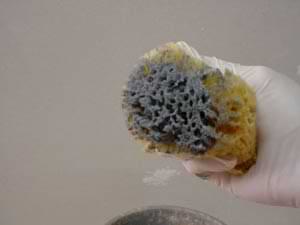
Sponge-throwing

I've just noticed the slightly odd reference to sponge-throwing in the passage from Chrysippus I quoted in the last post:
For in disappointment we are 'outside of' or 'beside' ourselves and, in a word, blinded, so that sometimes, if we have a sponge or a bit of wool in our hands, we pick it up and throw it, as if that would achieve something.
How often would people throw sponges about? Were there sponges just lying around in ancient houses like those foam stress-relief toys? [1] It reminds me of the other very famous instance of someone getting all fed up and throwing a sponge, namely the story of Apelles the painter in Sextus Empiricus PH 1.28:
Once, they say, when Apelles was painting a horse and wished to represent in the painting the horse's foam, he was so unsuccessful that he gave up the attempt and flung at the picture the sponge on which he used to wipe the paints of his brush, and the mark of the sponge produced the effect of a horse's foam (Bury's translation).
For Sextus, this is an example of how the sceptic might stumble upon tranquillity about a given question not by finding a convincing answer but by coming to see how all the possible answers are somehow not convincing enough. Best then to suspend judgement and -- hey presto! -- that's something that brings along the tranquillity we wanted all along. Apelles' story was perhaps quite famous (I wonder if it was in Antigonus of Carystus' account of the painter's life; Antigonus also wrote a Life of Pyrrho, the philosophical inspiration for Sextus' scepticism). But anyway, here's my thought:

Is Chrysippus' reference to throwing a sponge in frustration part of a discussion over the Apelles' story, or something like it? Perhaps it goes like this: the Stoics interpret Apelles' frustration in a way consistent with their general intellectualist account of the emotions. At the root of it is some kind of dispositional belief combined with some judgment about the current failings of his attempts to paint the horse's foam. To get things right, for the Stoics, Apelles ought to get his general beliefs right about what truly matters and what does not. Does it really matter if in the end your painting looks a bit crappy? As in their more famous account of the archer, a good painter is a painter who does all a painter can do to try to get the right result. The final result itself if not ethically significant. (This seems to me not altogether plausible, at least in the case of painters, but that's another story. A good painter is surely someone able to produce good paintings and, because in Apelles' case we are thinking about mimetic art, a good painting will be one which convincingly represents the intended subject; the end result in this instance is clearly rather important...)

Anyway, Sextus has a different story: for him, what matters is that Apelles did get the right result after all (the sponge did create the desired effect), but it did not happen in the way Apelles had expected. The frustration he feels at the repeated failure of his individual attempts at the right technique for painting the foam leads cumulatively to a feeling that there is no particular way to get this right. And it is this position of dissatisfaction which leads to his gesture of surrender -- throwing the sponge -- which unexpectedly leads to the right result.

Now, I have no idea how plausible this is. In any case, the story of Apelles is a nice way to contrast the Stoics and sceptics on an important bit of psychology. And, of course, for Sextus, Apelles' story stands for a general account of Pyrrhonist method, not just an account of a Pyrrhonist's emotional life. But I do wonder if buried somewhere in the mass of evidence we have lost there is some connection between Chrysippus' remark and Sextus' story.
[1] Come to think of it, didn't the Romans -- and probably Greeks -- use sponges as a way of cleaning themselves after using the toilet? And probably also in the bath? You can learn a lot about Greek toilets here. Not sure whether that's a plausible situation for one to feel beside oneself in disappointment, though...

Tuesday, January 08, 2008

Door-kicking

It's nice when you are reading something ancient and come across a passage which strikes a very particular and direct chord. I'm reading Margaret Graver's new book, Stoicism and emotion (Chicago, 2007) and enjoying it a lot. I was also very pleased to read a passage from Galen which she discusses near the beginning of chapter 3. She is interested in the sense that the Stoics can give to the idea that emotions are 'up to us', that is are ultimately dependent on ourselves and we can be held responsible for them. This is a hot topic for some ancient philosophers, closely related to the famous discussions over the possibility of akrasia -- 'weakness of will' or 'incontinence' -- the possibility that I might be overcome by anger, or pleasure, or erotic passion, or some such and end up acting contrary to my better judgement. The Stoics' general psychological picture would appear to rule out this sort of phenomenon. So it is interesting to hear Chrysippus saying something like this:

“οὕτω γὰρ ἐξιστάμεθα καὶ ἔξω γινόμεθα ἑαυτῶν καὶ τελέως ἀποτυφλούμεθα ἐν τοῖς σφαλλομένοις, ὥστε ἔστιν ὅτε σπόγγον ἔχοντες ἢ ἔριον ἐν ταῖς χερσὶ τοῦτο διαράμενοι βάλλομεν ὡς δή τι περανοῦντες δι’ αὐτῶν. εἰ δ’ ἐτυγχάνομεν μάχαιραν ἔχοντες ἢ ἄλλο τι, τούτῳ ἂν ἐχρησάμεθα παραπλησίως.” καὶ ἐφεξῆς “πολλάκις δὲ κατὰ τὴν τοιαύτην τυφλότητα τὰς κλεῖς δάκνομεν καὶ τὰς θύρας τύπτομεν οὐ ταχὺ αὐτῶν ἀνοιγομένων πρός τε τοὺς λίθους ἐὰν προσπταίσωμεν, τιμωρητικῶς προσφερόμεθα καταγνύντες καὶ ῥιπτοῦντες αὐτοὺς εἴς τινας τόπους καὶ ἐπιλέγοντες καθ’ ἕκαστα τούτων ἀτοπώτατα.”

Chrysippus, in Galen PHP 4.6.43-5 De Lacy
Here is Graver's translation:

For in disappointment we are 'outside of' or 'beside' ourselves and, in a word, blinded, so that sometimes, if we have a sponge or a bit of wool in our hands, we pick it up and throw it, as if that would achieve something. And if we happened to be holding a dagger, or some other weapon, we would do the same with that... And often, through the same blindness, we bite keys and beat at doors when they do not open quickly, and if we stumble on a stone we take revenge on it by breaking it or throwing it somewhere, and we say very odd things on such occasions.

This is cited by Galen as part of his general discussion of Platonic vs. Stoic psychology and that is obviously a worthy and interesting discussion in its own right. The passage made me smile, though, because intense rage at inanimate objects is something to which I am, unfortunately, personally prone.
Now, I am quite prepared to believe that this failing is 'up to me' in the sense relevant to my being subject to moral evaluation for it. But there it is. I could probably do with some well-aimed psychological therapy at the hands of some Epictetus or Socrates. (Then again, they would probably annoy me even more...) And I do know that it has landed me in some hot water. For instance, I once was coming into the house from the garden and carelessly as I opened the door allowed it to bump into and push over my little girl, who had been in the house trying to spy me through the cat flap. In the heat and emotion (embarrassment, anger, self-criticism) that followed, I somehow decided that the right thing to do was to kick the offending back door very hard. I managed, however, to put my foot right through the cat flap, smashing it. So the whole thing was made much worse and I had to spend the rest of the afternoon finding and fitting a replacement.

Well, I'm not sure whose analysis of these situations is right, Chrysippus' or Plato's. But I'm sure that they happen. And it shows that you don't need to go digging around high literature like Homer or Attic tragedy to find illuminating and complicated psychological examples.

Thursday, January 03, 2008

Something sustaining

Back at work in earnest today, and I've just realised that I've been through ten or so contributions to the Cambridge Companion to Epicureanism that I am editing and have been changing the bibliographies to a slightly incorrect formatting. Bum. I'll have to go back tomorrow and hunt down the pesky edited volumes and move people around. Yes, I know Endnote or something else clever would probably do it for me, but if not all the contributors use it and if I have always been too mean to shell out then I suppose I'll just have to buckle down and do it old skool.

Still, I was cheered up tonight because younger daughter chose one of my favourite stories for bedtime: chapter two of Winnie the Pooh, '...in which Pooh goes visiting and gets into a tight place'. If you haven't read it (shame on you) then you can do so here. I'm not entirely sure that its copyright kosher to put that on the 'net, but it's there. In fact, even if you have read it, then treat yourself to five minutes fun and read it here. It's best, of course with the E. H. Shepard illustrations (shame on those Disney folk...) The prose is brilliant -- especially the exchanges between Rabbit and Pooh. But tonight I particularly enjoyed the reference Pooh makes to the sort of book he would like to hear while he is waiting to get thinner and become unstuck from Rabbit's front door:
"Then would you read a Sustaining Book, such as would help and comfort a Wedged Bear in Great Tightness?"
(The capitals are important.) That sounds like just the sort of thing that would help me right now, both in my post Xmas/too many Celebrations (the chocolates)/ aren't those new 85% cocoa After Eights good/ just another glass of wine then... sort of state and in my metaphorical need for sustinence in a time of Great Tightness.


Friday, December 21, 2007

Shame on us?

Alain be Botton writes in The Philosophers' Magazine here about the treatment his work has received at the hands of some professional academic philosophers including -- he names names so I don't have to -- one or two people who work like me on ancient philosophy. His piece concludes:

It clearly feels very important for academic philosophers to guard their borders aggressively. Doing so has brought them extraordinary neglect and mockery. I’d recommend that they learn to make philosophy into a big tent and stop being so threatened by practioners who don’t share their assumptions, lest they find out that there are no more true believers.

I know Alain feels very strongly about this; he was written to tell me as much when I posted something he felt discredited his work in much the same way here he says other professional philosophers have done. But I still think there is something of an improper contrast being made, and perhaps being pursued by both sides. It seems to me that a 'big tent' might well be a good idea, but only so long as it's big enough that we can do what we each do without having to jostle for space or feel threatened by one another. Attacking writers like de Botton for doing what they do might well be unfair and/or unproductive. I see no reason not to call it philosophy. But similarly, telling professional academic philosophers they are somehow doing a disservice to philosophy by pursuing more abstruse or technical or less popular avenues of research is not going to get us very far either. That too offers too narrow a vision of what the subject is and should be.

Tuesday, December 18, 2007

Feedback

And one little coda to the interview story: not long ago I rediscovered a little postcard sent to me in December 1991 by the person who was eventually to be my Director of Studies at Clare; he was writing to tell me that I would be getting a conditional offer of a place. That sort of thing isn't supposed to happen any more, because it's important to be absolutely sure that any communication about decisions comes initially via the Admissions Office and is double-checked etc. But in some ways, that's a bit of a shame. That small card meant an enormous amount to me and also was a very humane way of letting me enjoy my Christmas without the anxiety of still not knowing how my application had gone.

Sunday, December 16, 2007

So, tell me a little about....

The admissions interview season is more or less over, so we can at last spend a few days frantically trying to do some of our own work before Christmas. I still remember my own interviews, so this time of year causes some serious flashbacks and I find myself sympathising a great deal with the various candidates who come along and have a go at answering tricky questions in a new and probably intimidating environment with rather a lot at stake. For my part, I hope I do what I can to make the experience reasonably pain-free without stinting on the level of care and seriousness that we apply to the decision-making. It's important for the interview to be revealing of what the various applicants would be like were they to be admitted, so it can't be too cosy.

Like all Classics applicants, I was interviewed at not just the college of my first choice (Clare) but at another place assigned by the Faculty. For me, this was Trinity, and the Trinity interview came first, on the morning after a v. hard test in Clare (which involved a chunk of the nastiest Latin I have ever read; or at least that's how it felt... I don't think there was a verb in the first sentence. Silver Latin, eh?). I had to find my way to Grange Road after a night freezing in a room in Memorial Court. Those were the days before central heating and certainly before en suite facilities -- all now demanded by the paying undergraduate clients and certainly by the lucrative conference facilities. I remember talking to my Trinity interviewer about Herodotus and Thucydides, and wondering how different they were -- even making up something about their prose style. I couldn't read a word of Greek at that time, so it was all a bit off the cuff. At the end, the interviewer told me that he reckoned I had a good chance but Trinity had so many of its own applicants that I probably wouldn't end up there. Fair enough. I hadn't applied to Trinity anyway; but it's interesting to note that that sort of talk is definitely -- and rightly -- verboten these days. (It may well have been verboten even then...)

Then three interviews at Clare, with the Director of Studies and one of the college lecturers, with the person who would eventually be my tutor, and with a Professorial fellow in Classics. These I remember less well, but I was certainly asked if I agreed with Quintilian's assessment of Livy's prose style (ummmm, well.... mumble....) and whether I'd prefer to know a little about a lot or a lot about a little. I have no idea what I said to that. Quite a full day, though.

Still, I think I enjoyed it. At least, I enjoyed the obvious time and attention being paid to my application. And that is still the case. The decisions are taken very carefully and with a great deal of consideration of each candidate's various strengths and weaknesses. It's a shame we cannot take more people, of course, and then there are people to whom the course or the method of teaching we offer are not well suited. In fact, if there is one piece of advice that I would insist upon for potential applicants it is that they all need to look carefully at the course they apply for. Make sure you know what it involves, what it does not cover, and the sort of work you will be doing. All that information is easily available, but it is surprising how many applicants appear not to have spent much time looking and thinking about what they are signing up for...

Friday, December 14, 2007

Monday, December 10, 2007

More shirts


It seems to me that there are more philosophy-themed t-shirts on sale than there are people who would wear philosophy-themed t-shirts. But sometimes they make me laugh, all the same. Here's one that made me laugh from Gadflycreations.com, 'Offering products than which none greater can be conceived'.

Friday, December 07, 2007

Grrrr

I've just got home on the Citi (sic) 2 bus service. Yes, I know I probably shouldn't be using Stagecoach buses, but it's the only service in town. It was grim enought waiting 40 minutes for the 'every 20 mins' service, but then when I got on I had to share the bus with a eejit who insisted on playing the assembled passenger aggresive rap from the tinny crap speakers in his mobile phone. Prat. I know it must be hard to get respec' on the mean streets of Impington or wherever, and perhaps somewhere in his tiny brain he was entertaining fantasies of ridin' round the projects of Baltimore but for Pete's sake stop inflicting this trebley drivel on all and sundry. Of course, this being Britain and because we're all worried about being knifed on public transport, no one said anything to get him to stop. And why should we have to in any case? Grrrr.

Ho ho ho

Term is over so we academics should all be sitting back and waiting for Christmas, right? Not a bit of it; hence the lack of much blogging recently. At the moment the colleges are full of students who are applying for admission in October 2008 (or for deferred entry in 2009). Our current first-years have only just started and already we need to think about the next year's intake. I find the whole process a lot of hard work, and pretty stressful. Not, I suppose, as stressful as the candidates find it. But all the same, there are some big decisions to be made and we try to make them fairly and well.

That's not all. For our Faculty, this is the time of year when we begin to set exam papers for the summer. It's a long and baroque process, with all sorts of complicated discussions about formats and fonts and markbooks and workbooks and candidates from other courses and the like. One of the hardest parts of the job, in fact, is moving between the various different teaching, Faculty, college, research, and publication tasks that we each take on. I can't juggle and I'm only just able to manage this working equivalent.

But there are some things to smile about too. Like: www.elfyourself.com (8 new elves per second, apparently...). Or the interesting and often very bright students we get to interview. Or finding out that YouTube has footage of perhaps the best thing that Socrates ever did.

Sunday, December 02, 2007

Had I written it...

Ah, the demise of the subjunctive... Not long after I became grumpy at the sight of a college Governing Body paper written with clauses like: 'The committee recommend that X is [sic] tasked with' etc..., I find that the new lamentable OJ Simpson book has the title 'If I did it'. Now, this is fine for the Goldman family, I suppose, because now they have been granted rights to the book they can arrange the title on the front cover with the 'If' in a colour that blends almost imperceptibly into the background. But really, what would have been so wrong with 'Had I done it...'? Perhaps OJ is genuinely unsure whether he did it or not, so the remote conditional didn't strike him as appropriate. But I doubt it.